Business growth depends on more than selling a good product. Once orders increase, companies need a dependable way to move raw materials, finished goods and inventory between factories, warehouses, distributors and customers. Inland transportation services Noida can support this process by connecting businesses with important markets across India.
India is also moving toward a more integrated logistics ecosystem. The National Logistics Policy focuses on digitalisation, better logistics services, multimodal connectivity and improved supply-chain efficiency.
For businesses, the practical lesson is simple: transportation should be planned as part of the supply chain, not treated as an activity that begins only after an order is received.
What Does Inland Transportation Include?
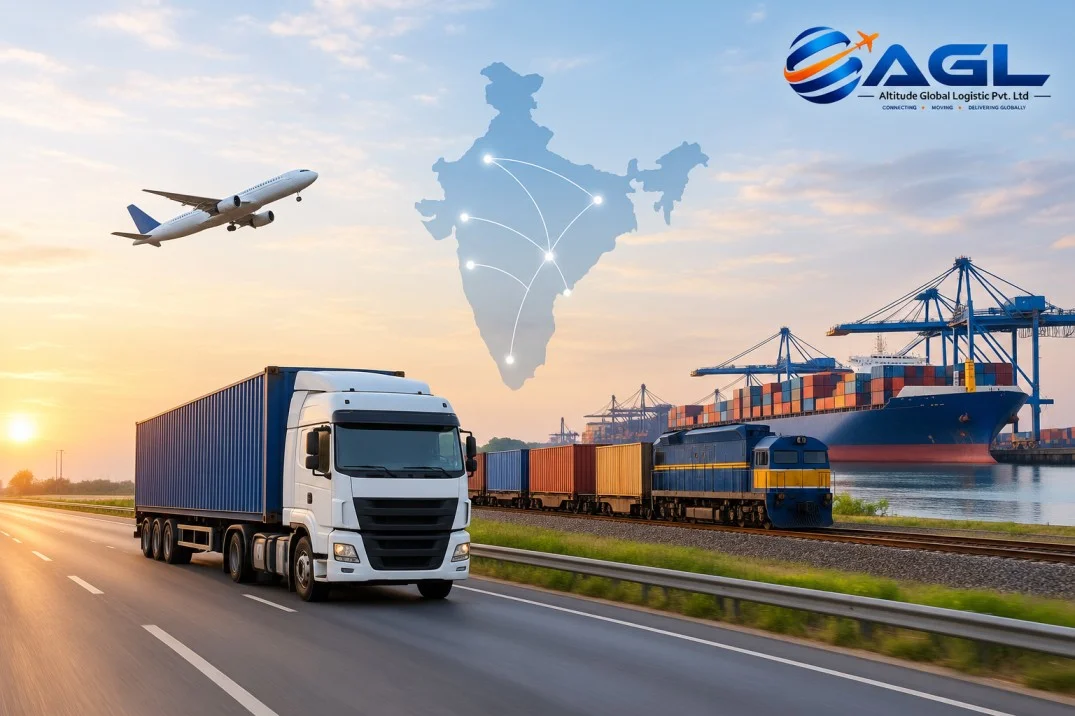
Inland transportation covers the domestic movement of goods through road, rail and, where appropriate, inland waterways.
For a business, this can include:
- Moving raw materials to manufacturing facilities
- Transporting finished products to warehouses
- Shifting inventory between distribution centres
- Delivering commercial shipments to distributors and customers
- Connecting factories and warehouses with ports, airports and inland container depots
- Managing first-mile and last-mile transportation
The right method depends on the shipment, destination, delivery schedule, cargo characteristics and available infrastructure.
Why Inland Transportation Services Noida Matter for Business Growth
Noida is part of the wider Delhi-NCR business and manufacturing ecosystem. Companies operating from this region may need to serve customers, suppliers and distribution points across several states.
A well-planned transportation network can make that expansion easier.
Faster Product Movement
When transportation schedules are properly coordinated, goods can move between production units, warehouses and customers with fewer avoidable delays.
This matters when businesses operate with time-sensitive inventory. Faster movement can also help companies respond to changing customer demand without unnecessarily holding large quantities of stock at every location.
Wider Market Reach
A company does not need to restrict its market to the city where it operates.
Reliable domestic transportation allows manufacturers, wholesalers, retailers and e-commerce businesses to serve customers in different regions. Regional warehouses can also be connected to a central distribution point, creating a more organised flow of inventory.
Better Coordination With Warehousing
Transportation and warehousing are closely connected.
If a vehicle reaches a warehouse when loading or unloading capacity is unavailable, the resulting waiting time can affect schedules and costs. Coordinating warehouse capacity, dispatch planning and vehicle arrival times helps reduce such operational friction.
The Indian government’s logistics initiatives also emphasise integrated logistics infrastructure, standardisation and multimodal transportation.
Technology Is Changing Domestic Logistics
Transportation today is not limited to trucks, drivers and delivery schedules. Digital tools are becoming an important part of supply-chain management.
Reliable Logistics Tracking
Reliable logistics tracking gives businesses greater visibility over shipments while they are in transit. Depending on the system being used, teams may be able to monitor shipment status, delivery progress and exceptions.
India’s logistics digitalisation efforts include ULIP and the Logistics Data Bank. In 2025, the government reported that ULIP had facilitated more than 160 crore transactions and that the Logistics Data Bank had tracked more than 75 million EXIM containers across 101 Inland Container Depots.
For an individual company, the value is practical: better visibility can help teams communicate with customers, coordinate warehouse operations and respond to delays sooner.
Order Management System
An order management system can connect order information with inventory, dispatch and fulfilment activities. When transportation planning is coordinated with order data, businesses can make better decisions about which stock should move, where it should go and when it needs to arrive.
This becomes increasingly useful as order volumes and delivery locations grow.
Inland Transportation Can Support Better Inventory Planning
Transportation data can also contribute to demand planning.
Businesses can review shipment frequency, delivery patterns, seasonal changes and regional order volumes. These insights can help with demand estimation and inventory positioning.
For example, if a company regularly sees higher demand in a particular region, it may consider keeping suitable inventory closer to that market. This can reduce unnecessary long-distance movement for individual orders.
The objective is not simply to transport goods faster. It is to create a supply chain that responds sensibly to actual business demand.
Multimodal Connectivity Creates More Options
Domestic logistics does not always have to depend on a single transport mode.
Road, rail and inland waterways can play different roles depending on the route and cargo. Government logistics planning increasingly focuses on connecting different modes and improving first- and last-mile connectivity.
This approach can give businesses more flexibility when planning long-distance freight movements.
For example, road transport may be suitable for local collection and final delivery, while rail or waterways may be considered for particular longer-distance movements where infrastructure and shipment requirements make them practical.
How Businesses Can Improve Inland Transportation
Study Your Regular Routes
Identify the locations that generate the highest shipment volumes and examine recurring delays, unnecessary kilometres and delivery patterns.
Coordinate Transport and Inventory
Transportation decisions should reflect stock levels, warehouse capacity and expected demand rather than being managed separately.
Evaluate Logistics Providers Carefully
Consider service coverage, shipment visibility, communication, handling capability, documentation and experience with your type of cargo before selecting a provider.
Use Technology Where It Helps
Tracking tools and order management systems can improve visibility, but technology should support a clear process rather than replace proper planning.
Challenges Businesses Still Face
It would be misleading to suggest inland transportation in India has no friction left. Road conditions vary widely between states, fuel price fluctuations affect freight costs unpredictably, and last-mile delivery in smaller towns still lags behind metro efficiency. GST implementation did simplify interstate movement by removing check-post delays, but driver shortages and seasonal demand spikes, especially around festivals, continue to strain capacity.
Businesses that plan around these realities, by booking capacity in advance during peak seasons or diversifying their transport partners, tend to avoid the worst disruptions.
Choosing the Right Transportation Partner
Not every logistics provider offers the same value. Businesses should look for partners who provide:
- Transparent pricing without hidden surcharges
- Real-time shipment visibility
- Flexible vehicle options for different load sizes
- A track record of on-time delivery across varied routes
- Responsive support when issues arise mid-transit
A partner that checks these boxes doesn’t just move goods; they become part of the business’s growth engine.
The Final Word
For growing companies, transportation can influence how efficiently products reach markets and how smoothly inventory moves through the supply chain. Inland transportation services Noida can help businesses connect factories, warehouses, distribution centres and customers across India.
The strongest results usually come from treating transportation as part of a wider logistics strategy involving demand estimation, warehousing, reliable logistics tracking and order management systems. India’s continuing focus on digital logistics and multimodal connectivity further highlights the importance of coordinated domestic freight movement.